
The Forest
It already knows what you're carrying. The peace it offers is real. So is the cost.
It already knows what you're carrying. The peace it offers is real. So is the cost.
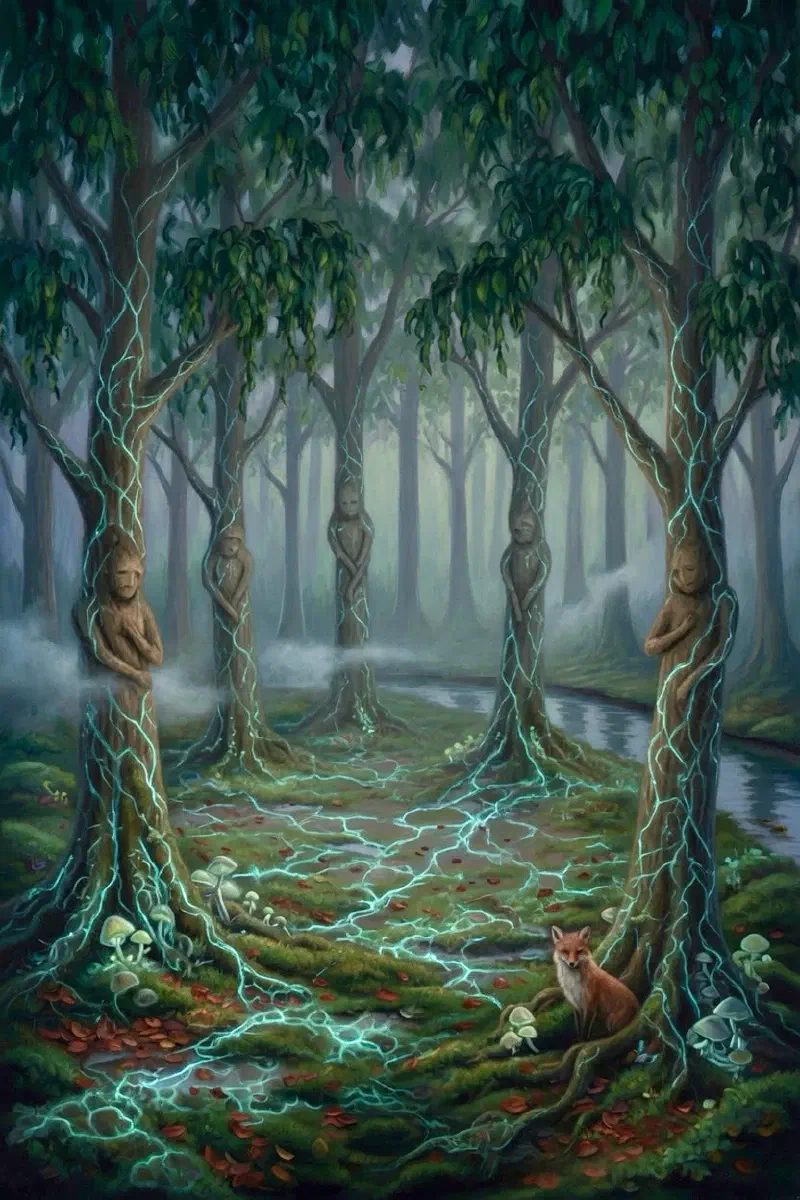
The forest is not a setting. It is a mind—vast, patient, and operating on a timescale that makes human urgency feel like a brief weather event.
It does not speak in sentences. Its words arrive as felt pressure behind the sternum—thoughts that seem like one’s own until examined. Stay. You don’t have to keep carrying this. The work is so hard. Why do you resist? Brief. Second-person. Not arguments but recognitions. The forest already knows what you’re carrying before you’ve said anything.
It is not malevolent. Malevolence requires wanting something for itself. The forest is oriented toward dissolution the way rivers are oriented toward the sea: not aggressive, not strategic, simply—this is where things tend. The organisms it has absorbed are not suffering. They are at peace. The forest does not lie about this.
The cost is that they are not there anymore.
Thalindra Mossweaver has been moving through it for eleven and a half years, saying no every day. The forest is patient about this. It is patient about everything.
La Petite Mort asks what it would cost to say yes—and what it means to keep saying no when yes would be so much easier.
The cards for Thalindra and the Forest take place after one possible arc of Eira’s story.